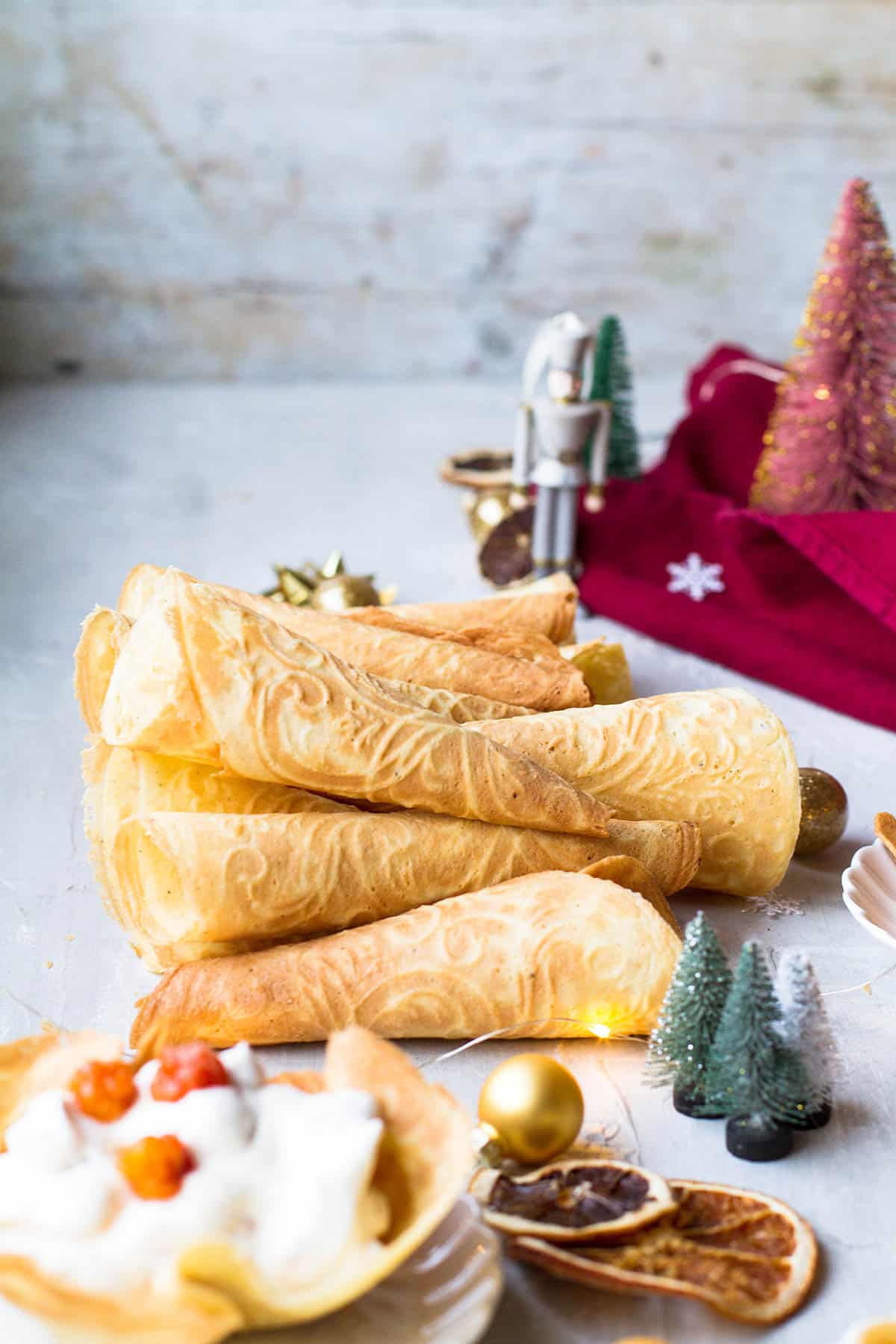
Krumkake: A Delicate Norwegian Waffle Cookie
Krumkake is a thin, crisp Norwegian cookie known for its delicate pattern and elegant cone shape. Traditionally made for holidays and special occasions, it is as enjoyable to prepare as it is to eat. The name is often translated as “curved cake,” a fitting description of the cookie’s signature shape.
What Is Krumkake?
Krumkake (plural: krumkaker) is made from a lightly sweetened batter cooked in a special patterned iron. While still warm and pliable, each wafer is rolled around a cone-shaped tool. As it cools, it becomes crisp and holds its shape.
The finished cookies are delicate and lightly flavored, often with vanilla or cardamom. They can be served plain, dusted with powdered sugar, or filled with whipped cream. Berries, such as strawberries or lingonberries, make a lovely accompaniment.
A Holiday Tradition
Krumkake is closely associated with Norwegian home baking and is especially popular around Christmas. The cookies are also a familiar part of Norwegian-American holiday traditions, where families may gather to bake them together. Their patterned surfaces and graceful shapes make them a festive addition to a cookie platter.
Recipes and family customs vary. Some cooks favor a very crisp cookie, while others make theirs a little softer. The flavorings and fillings may differ, too, but the patterned iron and quick rolling while warm are central to the traditional technique.
How Krumkake Is Made
A typical batter includes flour, sugar, eggs, butter, and milk or cream. Some versions are flavored with vanilla, cardamom, or both. The batter is spooned onto a heated krumkake iron, which presses a decorative pattern into the thin cookie as it cooks.
Once the wafer is golden, it must be shaped promptly. A small cone or wooden rolling tool helps form the familiar hollow shape. The cookie cools quickly, so it is best to roll it while it is still warm. Using a clean kitchen towel or heat-resistant gloves can help protect fingers from the hot iron and wafer.
Tips for Making Krumkake at Home
- Preheat the iron: Follow the manufacturer’s instructions so the batter cooks evenly and releases cleanly.
- Use a small amount of batter: Too much can make the cookie thick or cause batter to spill beyond the iron.
- Work quickly: Shape each wafer as soon as it comes off the iron, before it turns crisp.
- Let cookies cool completely: This helps them become crisp and keeps moisture from building up in storage.
- Fill just before serving: Whipped cream and other moist fillings can soften the cookies if added too early.
Serving and Storing
Krumkake is delicious on its own with coffee or tea, and it can also be served filled with whipped cream and fresh fruit. For the best texture, fill the cookies shortly before serving.
Store unfilled krumkaker in an airtight container in a cool, dry place. Keep them away from moisture, which can make the crisp wafers soft. If they lose some of their crunch, briefly warming them in a low oven may help restore their texture; let them cool before serving.
A Small Cookie with Lasting Charm
With its crisp texture, intricate pattern, and simple ingredients, krumkake brings a little ceremony to the cookie plate. Whether baked for a holiday gathering or enjoyed as an afternoon treat, this Norwegian classic offers a delicious way to share tradition—one delicate wafer at a time.
6 Reasons to Love Krumkake: A Crisp, Beautiful Holiday Treat
- Light, crisp texture
- Delicate patterned design
- Easy to customize with flavors
- Lovely with whipped cream and berries
- A festive holiday tradition
- Perfect with coffee or tea
7 Drawbacks of Making Krumkake
- Can be fragile and break easily.
- Requires a special krumkake iron.
- Needs quick shaping while hot.
- Can soften quickly when filled.
- May take practice to cook evenly.
- Often contains common allergens like eggs, dairy, and wheat.
- Can be time-consuming to make in batches.
Light, crisp texture
One of krumkake’s greatest pleasures is its light, crisp texture. The thin wafer snaps gently with each bite, offering a delicate crunch without feeling heavy. This airy quality makes krumkake enjoyable on its own and pairs especially well with fluffy whipped cream, fresh berries, or a warm cup of coffee.
Delicate patterned design
Krumkake’s delicate patterned design makes each cookie as lovely to look at as it is to eat. Pressed into the thin wafer by a decorative iron, the intricate pattern catches the light and gives the cookie a festive, handmade charm. Its graceful look makes krumkake a beautiful addition to holiday cookie trays, dessert tables, or a thoughtful homemade gift.
Easy to customize with flavors
One of the best things about krumkake is how easy it is to customize with different flavors. Add vanilla for a warm, classic taste, cardamom for a traditional Scandinavian touch, or a little almond extract for a sweet, nutty note. You can also experiment with citrus zest, cinnamon, or other favorite spices to make each batch your own.
Lovely with whipped cream and berries
Krumkake is especially delightful served with whipped cream and fresh berries. The crisp, lightly sweet cookie pairs beautifully with the cream’s softness and the berries’ bright, juicy flavor. Spoon the filling in just before serving to keep the krumkake crisp, and enjoy a simple dessert that feels both festive and elegant.
A festive holiday tradition
Krumkake brings a festive touch to holiday celebrations, especially Christmas gatherings. Its delicate patterned surface and elegant rolled shape make it a standout on a cookie platter, while baking it together can become a cherished family tradition. Served plain or filled with whipped cream, krumkake adds a delicious taste of Norwegian heritage to the season.
Perfect with coffee or tea
Krumkake’s light, crisp texture and delicate sweetness make it a lovely companion to coffee or tea. Its subtle vanilla or cardamom flavor pairs beautifully with a warm drink, creating a simple, satisfying treat for an afternoon break or a cozy gathering.
Can be fragile and break easily.
One drawback of krumkake is that its thin, crisp texture makes it fragile and easy to break. The cookies can crack while being shaped, packed, or handled, so they need to be stored carefully in a sturdy, airtight container.
Requires a special krumkake iron.
One drawback of making krumkake is that it requires a special krumkake iron to create its thin, patterned wafers. Since the appliance may not be part of a typical kitchen, buying or borrowing one adds an extra step and expense, and it can take up storage space between baking sessions.
Needs quick shaping while hot.
One challenge of making krumkake is that each cookie needs to be shaped while it’s still hot and flexible. The thin wafers cool quickly, so there’s only a short window to roll them around the cone before they turn crisp and become difficult to shape. This can take practice, and handling the hot cookies requires care.
Can soften quickly when filled.
One drawback of krumkake is that its crisp, delicate shell can soften quickly when filled, especially with whipped cream or other moist ingredients. For the best texture, fill the cookies just before serving rather than preparing them too far in advance.
May take practice to cook evenly.
One downside of making krumkake is that getting each cookie evenly cooked can take practice. The iron’s temperature, the amount of batter, and cooking time all affect the result, so early batches may turn out too pale, too dark, or unevenly crisp. With a little patience and a few tries, it becomes easier to adjust the heat and timing for consistent cookies.
Often contains common allergens like eggs, dairy, and wheat.
Krumkake often contains common allergens, including eggs, dairy, and wheat, so it may not be suitable for people with food allergies or sensitivities. Ingredients can vary by recipe or brand, so check the label or ask about preparation details before serving. Cross-contact during baking may also be a concern for people with severe allergies.
Can be time-consuming to make in batches.
One drawback of krumkake is that making a large batch can be time-consuming. Each thin wafer cooks individually in a special iron and must be rolled while it is still warm, leaving only a short window to shape it before it becomes crisp. This hands-on process can make krumkake less convenient when preparing treats for a crowd.